

Red Flags That You’re Burning Out, Based On Your Myers-Briggs® Personality Type
When we talk about burnout, it’s easy to imagine it as a blanket experience that everyone falls under uniformly – but that’s not the truth of it. As a certified MBTI® practitioner, I’ve observed how burnout shows up uniquely across different personality types. Through these findings, I’ve learned that burnout has layers and gradients that differentiate how each Myers-Briggs personality encounters, processes, and exhibits stress. In this article, we’ll be discovering how burnout shows up in what I call “the turn”—that point where stress ceases being a familiar (if unwelcome) presence and morphs into something that affects us at our core, causing us to operate in ways contrary to our innate preferences.
Want to find out what your personality type is? Take our personality questionnaire here. Or you can take the official MBTI® here.

Red Flags That You’re Burning Out, Based On Your Myers-Briggs® Personality Type
INFJ in Burnout
“I feel as if I’m acting in ways I can’t control, like I’m looking at myself from outside myself and reacting so quickly that the outside version of me can’t figure out why I’m doing what I’m doing. I regret what I’m doing as I’m doing it but I’m so consumed by frenetic energy I can’t change anything.” – Molly, an INFJ
INFJs usually have a gift for stepping back, noticing patterns, and finding the deeper meaning behind what’s happening. They’re the people who ask, “Where is this going?” and “What’s really happening underneath the surface?” But when burnout hits, that calm inner perspective can start to disappear.
At first, many INFJs try to handle stress by retreating. They need quiet, space, and a break from the endless noise of everyone’s opinions, needs, feelings, and notifications. Basically, they need to find the mental equivalent of a cabin in the woods where nobody asks them what’s for dinner.
But if the stress keeps piling up and that recovery time never comes, something shifts. Instead of feeling insightful and focused, they feel scattered and reactive. Their mind jumps from one thing to the next. They may impulsively start five different projects, make snap decisions they later question, or chase distractions just to get relief from the pressure inside.
It’s a strange experience for many INFJs because they can often see themselves acting out of character while it’s happening. They’re thinking, “Why am I doing this?” while simultaneously continuing to do the thing.
An example:
Imagine Sarah, an INFJ graphic designer who normally loves getting lost in a creative vision. Usually she can sit with an idea, refine it, and patiently bring it to life. But lately her brain feels like someone opened 50 browser tabs and then started playing music from one of them but she can’t figure out which one.
Projects she used to finish in a day now drag on for a week. She sits down to work, remembers she needs to answer an email, notices her desk is messy, decides she should reorganize everything, finds an old notebook, starts planning an entirely different project, and suddenly it’s three hours later and nothing she intended to do is finished.
Trying to regain a sense of momentum, she signs up for a new class, volunteers for something, or creates a brand-new plan for her life at midnight. But instead of feeling inspired, she just feels more overwhelmed. She doesn’t need more stimulation. She needs space to come back to herself.
Signs That You Need a Break:
If you notice that anxiety and restlessness are becoming constant companions, it might be a signal that you’re overdue for a break. Overindulging in sensory pleasures, feeling impatient and scattered, or an inability to look beyond immediate tasks are also strong indications. When your decisions become more impulsive and less thought-through, it’s time to acknowledge that you need to pause and recalibrate.
What can help:
- Taking some time off to rest and recharge alone
- Spending time in nature
- Engaging in mindfulness activities like yoga or meditation
- Writing in a journal to express your feelings
- Talking things out with a trusted friend or counselor
- Reducing sensory stimulation (turning off bright lights, loud music)
- Doing some light problem-solving, like playing Sudoku, playing solitaire, or another game

Find out more about INFJs: 10 Things That Terrify INFJs
INTJ in Burnout
“Everything seems to demand my attention at once, and my time for deep thinking is constantly interrupted. I tend to retreat into my own projects, but I can’t shake off the feeling that I’m not doing enough, or that I’m inefficient. It seems I am no longer the master of my own mental space.” – Alex, an INTJ
INTJs are at their best when they have space to think deeply, map things out, and work toward a vision that actually matters to them. They like having room to step back, spot patterns, and create strategies rather than constantly reacting to whatever is screaming the loudest.
But burnout often begins when that space disappears. Too many interruptions, too many demands, too much noise, and suddenly the INTJ feels like they’re spending their life putting out fires instead of building anything meaningful. Their mind, usually their private sanctuary, starts to feel crowded and chaotic.
At first, many INTJs respond by retreating. They may dive into their own projects, research, plans, or systems because it gives them a small pocket of control. But if the stress continues, they can hit “the turn.” Instead of being calm and strategic, they feel scattered and reactive. Long-term goals fade into the background while every little immediate problem feels impossible to ignore. They may jump from task to task, make impulsive choices just to feel unstuck, or distract themselves with quick hits of enjoyment because they’re too mentally exhausted to focus.
The frustrating part is that many INTJs know they’re not operating the way they want to. They can see the gap between the focused person they usually are and the overwhelmed person they’ve become.
An example:
Take Damien, an INTJ software developer who is happiest working on his own to find solutions and strategies to make his software excel.
Recently, though, everything feels urgent. Messages keep coming in. Deadlines overlap. Everyone needs “just five minutes,” and somehow those five minutes have eaten his entire week. Instead of getting the uninterrupted time he needs to do his best work, he spends his days bouncing between problems. He starts three different tasks but struggles to finish any of them. His desk, normally organized and intentional, is covered in sticky notes, coffee cups, and reminders of all the things he hasn’t gotten to yet.
Trying to get back in control, he pushes harder. He adds another productivity system. He makes another plan. He tells himself he just needs to be more disciplined.
But the problem isn’t that Damien has suddenly become lazy or incapable. His mind has been running without enough room to breathe.
Signs That You Need a Break:
For INTJs, a loss of interest in exploring new ideas or a skepticism towards projects they would typically enjoy can indicate burnout. On top of that, if you’re turning down opportunities to strategize or innovate, favoring isolation over teamwork, or feeling a pervasive sense of pessimism, it might be time to step back. Signs of burnout include overwhelming mental fatigue, irritability in collaborative environments, and a detachment from long-term planning. They can also include feeling more scattered, impulsive, and pleasure-seeking.
What can help:
- Taking some quiet time for yourself
- Getting in touch with your body via exercise or a walk in nature
- Mindful practices such as meditation
- Reading a book to calm your body and mind
- Checking in with your senses to see if you need food, rest, or hydration
- Writing down your feelings and thoughts in a journal
- Listening to music that resonates with how you feel

Want to know more about INTJs? Read 24 Signs That You’re an INTJ, the Strategist Personality Type
INTP in Burnout
“It’s like my mind is clouded and I’m second-guessing every decision. I can’t shake the feeling that no matter what I do, I’ll be misunderstood or judged by others. It’s isolating and I’m just tired of trying to figure it all out on my own.” – Eliot, an INTP
INTPs are usually at home inside the world of ideas. They love analyzing, questioning, exploring possibilities, and taking things apart mentally just to see how they work. Their minds are like personal laboratories where every theory gets tested, refined, and improved. But when burnout hits, that usually dependable mental clarity can start to feel foggy. The questions that once led to breakthroughs start turning against them. Instead of “How does this work?” or “What’s the most logical explanation?” their brain starts asking, “What if everyone thinks I’m incompetent?” “What if I said the wrong thing?” “What if I’m the problem and I just can’t see it?”
This can be especially disorienting because INTPs are used to trusting their ability to step back and analyze things objectively. But in burnout, they may find themselves replaying conversations, searching for hidden meanings, or interpreting neutral comments as criticism. At the same time, they may feel stuck between two conflicting needs: wanting connection and reassurance, but also wanting to disappear into a quiet room where nobody can perceive them for approximately three business weeks.
An example:
Let’s imagine a man named Barry, an INTP, who thrives in solving complex software problems. During burnout, Barry is riddled with insecurities about his abilities and seems obsessed with how his coworkers perceive his contributions. He suspects ulterior motives behind their feedback, feeling rejected, even when no slight is intended. Though he longs to reach out and clarify these misunderstandings, his usual communication style feels inadequate, deepening his sense of isolation.
Signs That You Need a Break:
Recognize the need for a break if you, as an INTP, find yourself feeling insecure and overwhelmed by possibilities that others are thinking negatively of you. You might find yourself misinterpreting body language as signs that others don’t want to be around you, or you may feel anxious for some sign that you belong. Normally you’re logical and able to see things in a level headed way, but you might suddenly feel like a “reject.”
What can help:
- Taking some time off to process your thoughts and feelings in a quiet space
- Sorting out your thoughts through means such as journaling or drawing
- After a period alone, talking out your frustrations to someone you trust
- Practicing mindfulness through meditation or simple breathing exercises to help gain clarity and acceptance of your emotions
- Reaching out to a therapist or counselor if the burden feels too heavy to shoulder alone

INFP in Burnout
“I find myself lashing out with words that are more cutting and less measured. Instead of seeing the good, I’m fixated on flaws and disappointments, both in myself and others.” – Taylor, an INFP
INFPs are imaginative, introspective people who notice the little sparks of meaning other people miss. They can look at an ordinary moment and find a story in it, a possibility in it, or some hidden piece of humanity worth paying attention to. But when burnout hits, that sense of openness can start to disappear.
The INFP mind that normally asks, “What could this become?” starts saying, “Here’s everything that’s wrong.” Instead of feeling connected to their creativity and values, INFPs may become painfully aware of every flaw, mistake, and disappointment around them. Problems that once felt like opportunities for growth now feel like evidence that nothing is working.
Their usual compassion is still there underneath, but it gets buried under exhaustion and frustration. They may become unusually blunt or critical, surprising others and even themselves. They might point out everything that’s broken, inefficient, unfair, or wrong and then later think, “Why did I say it like that?” Burnout can feel especially discouraging for INFPs because it can temporarily cut them off from one of their greatest strengths: their ability to imagine something better.
An example:
Take Jordan, an INFP screenwriter who usually loves creating meaningful stories and exploring new possibilities through his imagination.
But after months of stress, the ideas that used to excite him start to feel pointless. Every draft has problems. Every character feels flat. Instead of getting curious about where the story could go, he gets stuck criticizing everything that isn’t working. And this mindset doesn’t stay neatly contained in his writing. Feedback feels frustrating, conversations feel draining, and everywhere he looks he notices flaws instead of possibilities.
It’s difficult because he doesn’t want to feel this negative. He misses the version of himself who could see potential everywhere.
Signs That You Need a Break:
If you’re an INFP who finds yourself persistently critical and caught up in the blame game, it might be a sign to take a breath. Feeling trapped in a view where everything seems wrong, engaging in confrontations that are out of character, or seeing the glass as not just half empty but cracked and leaking, are red flags signaling the need for self-care. When the problems in your world seem insurmountable and solutions elusive, it’s time to acknowledge the toll that stress is taking on you.
What can help:
- Finding solace by setting aside time to unwind and reflect on your feelings
- Channeling emotions into artistic endeavors, whether it’s through journaling, sketching, or crafting
- Re-establishing peace of mind through meditation and reconnecting with your core values
- Celebrating past victories and recounting moments of success
- Participating in gentle physical activities like yoga or a leisurely walk
- Experiencing a new environment, perhaps a quiet retreat into nature
- Watching films or reading books that lift your spirits
- Seeking the company of someone who offers an empathetic ear without giving a lot of advice
Find out more about INFPs: Dealing with Emotional Overwhelm as an INFP
ISFP in Burnout
“It feels like everything’s off balance, like I’m reacting without having time to think about what I’m reacting to. Everything around me feels like a problem I need to fix, a problem I’ve let go for waaaaaaay too long.” – Casey, an ISFP
ISFPs are usually guided by a strong sense of what matters to them. They notice beauty, meaning, and the little details that make life feel more meaningful and rich. They’re often adaptable people who prefer to respond to life as it unfolds rather than force everything into a rigid plan.
But when burnout hits, that easygoing flexibility can disappear. Suddenly, everything feels like a problem that needs to be solved immediately. The messy closet isn’t just a messy closet, it’s evidence that they’re failing at adulthood. One missed deadline becomes proof that their whole life is falling apart.
Instead of feeling connected to what they love and value, ISFPs can become overwhelmed by everything that seems broken, inefficient, or out of control. They may criticize themselves harshly, snap over small mistakes, or feel an urgent need to overhaul everything at once. The hardest part is that the pressure they’re putting on themselves usually comes from wanting to make things better.
An example:
Let’s look at Leah, an ISFP interior designer who usually loves creating spaces that feel beautiful, personal, and meaningful. However, after months of stress, she starts noticing every flaw. The tiny imperfections she used to handle creatively now feel impossible to ignore. She gets frustrated with colleagues over small mistakes and feels like every unfinished task is proof that she’s fallen behind. Before long, she’s convinced she needs a complete life overhaul: a new schedule, a new system, a new plan to fix everything.
But what Leah really needs isn’t to rebuild her entire life overnight. She needs enough space and rest to reconnect with herself again.
Signs That You Need a Break:
Recognize the need for a break if you, as an ISFP, find yourself obsessively critiquing your work or the work of others, struggling with a sense of powerlessness over mistakes, or if you’re feeling compelled to overhaul your life overnight. The presence of an irrational fear that catastrophe is just around the corner if things stay the same also points to the necessity for some downtime.
What can help:
- Carve out some quiet time to be alone with your thoughts and feelings.
- Pen down your emotions and thoughts in a journal to process them more clearly.
- Watch an engrossing mystery film or TV series that captures your imagination.
- Engage in mindfulness practices such as meditation or guided visualization to restore a sense of calm.
- Spend time outdoors, perhaps in a garden or by the sea, to reconnect with the natural world.
- When feeling better, work on setting up practical systems that make managing daily tasks less overwhelming, such as tidying your living and work areas, or using apps to keep track of to-dos and appointments.

Discover more about ISFPs: 10 ISFP Characters from Movies, Books, and Television
ISTP in Burnout
“I feel drained. Suddenly, everything and everyone feels like they demand too much from me emotionally, but I also want a hug. It’s confusing.” – Dan, an ISTP
ISTPs are known for staying cool-headed and practical even in a crisis. They’re the people who can detach, analyze the situation, and figure out what needs to be done without getting swept away by the chaos around them. But when burnout hits, that sense of steady independence can start to crack.
The things they would normally shrug off suddenly feel heavier. A passing comment, a shift in someone’s tone, or a moment of tension that they’d usually ignore can stick in their mind longer than expected. Instead of easily separating useful feedback from emotional noise, they may start questioning where they stand with people.
This can be especially frustrating because many ISTPs are used to feeling self-sufficient. They don’t typically need constant reassurance or approval to trust their own judgment. But under extreme stress, they may find themselves wondering, “Did I mess something up?” “Is everyone annoyed with me?” “Am I missing something obvious?”
They may pull away because interaction feels exhausting, while at the same time craving some sign that they’re understood and valued. Basically, their brain hits them with: “Please leave me alone. Also, please prove you care.”
An example:
Let’s imagine Connor, an ISTP, who is known for being cool and independent. As a software developer, Connor takes pride in providing logical solutions to complicated problems. However, under the weight of consecutive deadlines and an ever-growing workload, Connor begins to notice a shift in their reaction to colleagues’ offhand remarks. Where previously a critical comment would be met with indifference or a constructive response, Connor now lies awake contemplating the underlying intentions of their peers, their tone, their choice of words. The slightest frown from a teammate during a meeting sets off a spiral of self-doubt. This is obviously a stark contrast to their usual disregard for other’s opinions. Their need for affirmation grows, evident in their uncharacteristic over-explaining of decisions or seeking reassurance for tasks they are well-versed in. This emotional insecurity is a clear signal that Connor’s resilience is compromised, underscoring the need to address their burnout.
Signs That You Need a Break:
You know it’s time for an ISTP to unplug when they feel atypically insecure and emotionally sensitive. If you’re the ISTP in question, you might find yourself unable to disregard minor annoyances, feeling detached from people around you, and wanting to get a sense of connection back. You might feel a pervasive sense of insecurity and feel plagued by worries about what others think of you. The drive to seek attention from others, especially when it’s out of character, signals a necessity for self-care and recalibration.
What can help:
- Exercise to release pent up energy and give yourself a boost of stress-relieving endorphins
- Practice mindfulness with deep breathing or yoga to center yourself.
- Remind yourself of the people who care about you no matter what.
- Engage your mind with a mystery novel or film to distract from stress.
- After reducing stress, prioritize regular and meaningful social interactions to avoid future emotional turmoil.
Curious about ISTPs? Read 12 Amazing Fictional ISTPs
ISFJ in Burnout
“I feel like I’m surrounded by disaster, aware of every single detail that’s not in place, analyzing the myriad ways things could topple over, and yet feeling paralyzed to stop it.” – Candace, an ISFJ
ISFJs are often the steady, thoughtful people others rely on. They’re usually good at noticing what needs attention, remembering what matters, and creating a feeling of stability for themselves and the people around them.
But when burnout hits, that sense of stability can start to disappear. The same mind that usually says, “I’ve handled hard things before; I know what to do,” starts saying, “But what if this time everything goes wrong?”
Instead of using past experience as a source of confidence, ISFJs become overwhelmed by everything they can’t predict. Their mind starts generating worst-case scenarios faster than they can respond to them. One small problem turns into a chain reaction of everything that could possibly fall apart.
For example, the forgotten appointment isn’t just a forgotten appointment. It’s the first domino in a series of disasters that somehow ends with their entire life collapsing. They may recognize that their fears are unlikely, but that doesn’t always stop the mental spiral. Their brain is trying to protect them by preparing for every possibility.
An example:
Take Sophia, an ISFJ event planner who usually excels at keeping track of details and making sure everything runs smoothly.
After months of stress, the details that used to help her feel prepared now feel overwhelming. When she realizes the caterer is running ten minutes late, her mind doesn’t stop at “the food might be delayed.” Suddenly she’s imagining unhappy guests, a ruined event, angry reviews, and the end of her career. A part of her knows the caterer has always been reliable and everything will probably work out. But when she’s this exhausted, her brain keeps scanning for what could go wrong instead of reminding her of everything that has gone right before.
What Sophia needs isn’t to prepare for every possible disaster. She needs time to regain the calm, grounded perspective she usually brings to challenges.
Signs That You Need a Break:
If you’re an ISFJ who’s feeling scattered, caught in a loop of catastrophic thinking or preoccupied with the fear that every future endeavor is doomed to fail, it might be time to pause. Engage in a moment of stillness where you can listen to your inner voice without the cacophony of your daily responsibilities shouting over it.
What can help:
- Recharge by taking a step back and reflecting on occasions when you’ve faced challenges in the past and gotten through them successfully. Allow those memories to reassure your current self.
- Carve out meaningful solitude that grants you the bandwidth to breathe and process your thoughts in a structured way.
- Vent your feelings with a trusted friend who understands the power of simply listening, without jumping in with solutions.
- Write down the tangled web of your concerns and read them aloud, as if to purge them from your system. Hearing your concerns out loud can sometimes help you to process them in a more calm way.
- Spend quality, quiet time with a pet, letting their uncomplicated companionship soothe the emotional frustration.
- Treat your mind with puzzles like Sudoku. This can activate your introverted thinking side, helping you find a sense of reason in the storm of emotion.

Find out more about ISFJs: Are ISFJs Rare? A Look at the Protector
ISTJ in Burnout
“I’m normally pretty chill. But I suddenly start worrying that I’ve forgotten important details and because of that everything is going to fall apart in my life. I see disaster everywhere.” – Malik, an ISTJ
ISTJs are usually grounded, observant people who trust what they know. They pay attention to what works, learn from experience, and have a methodical, practical way of dealing with challenges. But when burnout hits, that sense of steadiness can start to unravel.
The same mind that usually says, “I’ve handled this before; here’s the next step,” starts throwing out every possible thing that could go wrong. Instead of feeling prepared, ISTJs begin second-guessing themselves and worrying that they’ve missed something important. A tiny mistake doesn’t feel tiny anymore. It feels like the loose thread that could unravel their entire lives.
They tend to become restless, scattered, and unusually anxious about the future. Tasks they normally handle with confidence suddenly feel overwhelming. They might check and re-check details, struggle to focus, or get stuck mentally preparing for disasters that probably won’t happen.
An example:
Let’s imagine Calvin, an ISTJ troop leader who is organizing the annual camping trip. Usually, Calvin is the person everyone trusts because he thinks ahead. He knows what needs to be packed, what problems might realistically happen, and how to keep things running smoothly. But this year, burnout has been creeping in.
When one of the scouts mentions a small tear in a tent, Calvin’s mind immediately jumps ahead. What if it rains? What if everyone’s belongings get soaked? What if the whole trip falls apart because he overlooked one tiny detail? Part of him knows the forecast is clear and the problem is fixable. But stress keeps pulling his attention toward everything that could go wrong.
Signs That You Need a Break:
You know it’s time to take a break if you, as an ISTJ, find yourself feeling more scattered, unfocused, or are gripped by visions of the worst possible outcomes. If you notice a growing sense of dread about future projects, an unusual loss of social filters, or a surprising interest in outlandish theories, these are signals that it’s crucial to step back and regroup.
What can help:
- Prioritize taking uninterrupted time for yourself to simply unwind and gain clarity amidst the chaos.
- Actively remind yourself of times from your past where you dealt with similar situations and succeeded.
- Document what is currently overwhelming for you and arrange these issues in order of how they can be tackled, breaking down the mountain into manageable hills.
- Listen to music that mirrors your mood, aiding you in working through your feelings rather than suppressing them.
- Develop the habit of journaling daily to express thoughts and worries, creating an outlet for the anxiety that might otherwise be suffocating. But don’t forget to also jot down things you’re grateful for as this can dramatically improve your overall mindset!
Find out more about ISTJs: 12 Amazing Fictional ISTJ Characters
ENFJ in Burnout
“Even surrounded by people, I feel invisible and unheard. I’ve poured so much of myself into helping others that when I start to burn out, it feels like I’ve got nothing left.” – Genevieve, an ENFJ
ENFJs are often gifted at seeing potential: in people, relationships, communities, and ideas. They’re usually driven by a desire to create something meaningful and bring out the best in the people around them. However, when burnout hits, that natural sense of connection can start to fade.
After carrying too much for too long, ENFJs may begin to feel like their efforts don’t matter or their contributions are invisible. The encouragement and insight they usually offer others becomes harder to access, and they may find themselves pulling away from the very relationships that normally energize them. At the same time, their inner critic gets more extreme and distracting. Instead of naturally noticing progress and potential, they start noticing every flaw. Small mistakes become glaring. Inefficiencies become unbearable. They may analyze everything they or others are doing wrong, trying to figure out the “real problem” behind why things feel so off.
An example:
Take Alexandria, an ENFJ who leads a nonprofit and is known for inspiring her team and bringing people together around a shared idea.
But after months of pressure, deadlines, and everyone depending on her, something changes. Instead of noticing the progress her team is making, she starts seeing every mistake. A typo in a report feels impossible to ignore. A delayed response feels like evidence that someone isn’t committed. Meetings that used to inspire her now leave her inwardly cataloging everything that could be improved.
She knows she cares about these people. She knows the work matters. But exhaustion has narrowed her focus until all she can see are the problems.
Signs That You Need a Break:
If you’re an ENFJ feeling as if your care and contributions are invisible, if you’re withdrawing despite your inclination to connect, if helplessness has taken the place of your usual confidence, or if your focus starts scattering and every slight or imbalance in fairness cuts deeper, then it’s time to grant yourself permission to rest. It’s not uncommon to feel more sensitive, to indulge in self-critical thoughts, or to see nothing but logical inconsistencies in the world around you.
What can help:
- Dedicate time for rest, allowing your body and mind the break they desperately need.
- Practice deep breathing or meditation to cultivate a space of inner peace amidst the outer turmoil.
- Keep a journal where you can offload your feelings and process them without judgment.
- If your thoughts are overwhelming, share them with someone close who won’t overwhelm you with a lot of logical advice or “fixes”.
- Acknowledge your achievements, however small, and let yourself enjoy breathers after accomplishing something on your list
- Sometimes, laughter is a powerful medicine; watch your favorite comedy to lighten your mood.
- Changing your scenery can also reinspire you; consider a walk in nature or a stroll through a new neighborhood to refresh your perspective.
ENTJ in Burnout
“My laser focus is gone. I’m trying to gear up, but there’s just this scatter-brained fog. At the same time, I feel like I’m being taken for granted and there’s this massive amount of work but nobody is willing to step in and help me.” – Sara, an ENTJ
ENTJs are usually driven, strategic people who know how to turn ideas into reality. They’re often the ones creating plans, solving problems, and pushing through obstacles when everyone else feels stuck.
But when burnout hits, that sense of direction can start to disappear. ENTJs are used to asking, “What needs to be done?” and finding a way forward. But after pushing themselves too hard for too long, a different question starts creeping in: “Does any of this even matter?”
Tasks they normally handle with confidence feel heavier. Decisions that once seemed obvious become exhausting. And the emotions they’ve been setting aside until “after everything is handled” suddenly show up demanding attention. They may feel unusually sensitive, unappreciated, or frustrated that they’ve carried so much responsibility alone. Their instinct is often to withdraw and deal with these feelings privately, but isolation can make the sense of being unseen even stronger.
An example:
David, an ENTJ, prides himself on his role as a dedicated father and the CEO of a tech startup. Relentlessly pushing toward his dual responsibilities, he rarely acknowledges the onset of exhaustion. Yet, as stress accumulates, it chips away at his take-charge persona. Now, when he comes home from a stressful day of back-to-back meetings, instead of his usual playtime with his children, he retreats to his study, sinking into a chair with a sigh. He’s consumed by thoughts that his hard work is going unnoticed, both at home and at the office. Ironically, his isolation only serves to exacerbate his sense of alienation, creating a self-imposed barrier between him and the very people who value and depend on him. This growing divide deepens his belief that despite doing everything to provide for his family and business, his efforts are but a drop in an unappreciative ocean.
Signs That You Need a Break:
If you’re an ENTJ who’s feeling unappreciated and unseen, wishing to withdraw to deal with your feelings, or feeling more powerless than ever, it’s crucial to step back and work on calming the torrent of stress you’re feeling. Being hypersensitive to feedback, having a scattered focus, feeling a rare sense of self-pity, or complaining more than usual are all stark departures from your norm and clear indicators that it’s time to take a breather.
What can help:
- Schedule time to fully rest and detach from work-related concerns.
- Practice deep breathing exercises to reduce stress and refocus your mind.
- Keep a journal to articulate your thoughts and frustrations in a private space.
- Engage in meditation to regain clarity and composure.
- Find a trusted confidant who understands your need to vent without judgement or repercussions.
- Watch something that will make you laugh. Humor can sometimes be the most effective medicine!
- Allow yourself a change of scenery, where you can rejuvenate and distance yourself from the stimuli contributing to your burnout.

Find out more about ENTJs: 10 Things You Should Never Say to an ENTJ
ENFP in Burnout
“Lately, I just feel foggy. I’m getting caught up in stupid details, and it’s exhausting. I feel like I’m just going through motions, losing the imagination that usually drives me.” – Asher, an ENFP
ENFPs are curious, imaginative people who see possibilities everywhere. They naturally ask, “What if?” and “What could this become?” They’re energized by ideas, meaningful connections, and exploring new paths forward.
But when burnout hits, that wide-open perspective can start to shrink. Instead of seeing options and opportunities, ENFPs in this state feel trapped by everything immediately in front of them. Small tasks feel enormous. Minor mistakes become impossible to ignore. Their mind starts replaying what went wrong instead of imagining what could go right.
They tend to find themselves obsessing over details they’d normally handle and move past. An unanswered email, a small mistake from last week, or a weird ache in their body can suddenly consume way more mental energy than usual. The hardest part is that ENFPs may feel disconnected from the very things that usually make them feel alive: inspiration, possibility, creativity, and a sense that something exciting is waiting around the corner.
An example:
Let’s imagine Maya, an ENFP who is usually the hyeart of her social circle and the creative force within her marketing team. Normally, brainstorming sessions energize her. She loves experimenting, making connections, and finding unexpected solutions.
But after months of stress, everything starts feeling heavier. Instead of dreaming up new ideas, she gets stuck obsessing over tiny details. One awkward sentence in a presentation bothers her for hours. A minor scheduling mistake feels like proof she’s falling apart. Even creative projects she used to love become another list of things she needs to “get right.”
This overwhelming attention to detail stifles her creativity, leading to late nights fretting over tasks she would typically not worry about at all. The joy she once found in brainstorming and connecting seems buried under a mountain of inconsequential decisions, leaving her to question whether her spark is gone forever.
Signs That You Need a Break:
If you’re an ENFP who feels that every small task is a mountain to climb, if you find yourself losing sight of your purpose and fixating on busy work, or if you notice that your usually resilient and positive outlook is waning, it may be time for a much-needed break. Obsessing over minute details or being hyper-conscious about bodily sensations are signs that your expansive energy is turning inward unhealthily.
What can help:
- Prioritize creating space in your schedule to simply be with yourself, away from the responsibilities.
- Actively cancel or postpone non-essential tasks that are crowding your mental space.
- Take care of your body by eating balanced meals, staying well-hydrated, and getting plenty of rest.
- Find someone to talk to who will listen to you vent without the compulsion to fix your problems immediately.
- Incorporate mindfulness exercises or meditation into your daily routine to regain a sense of control and calm.
- Get physical! exercise can often help in rekindling your inner spark and seeing beyond the fog of busyness. A massage can also help!
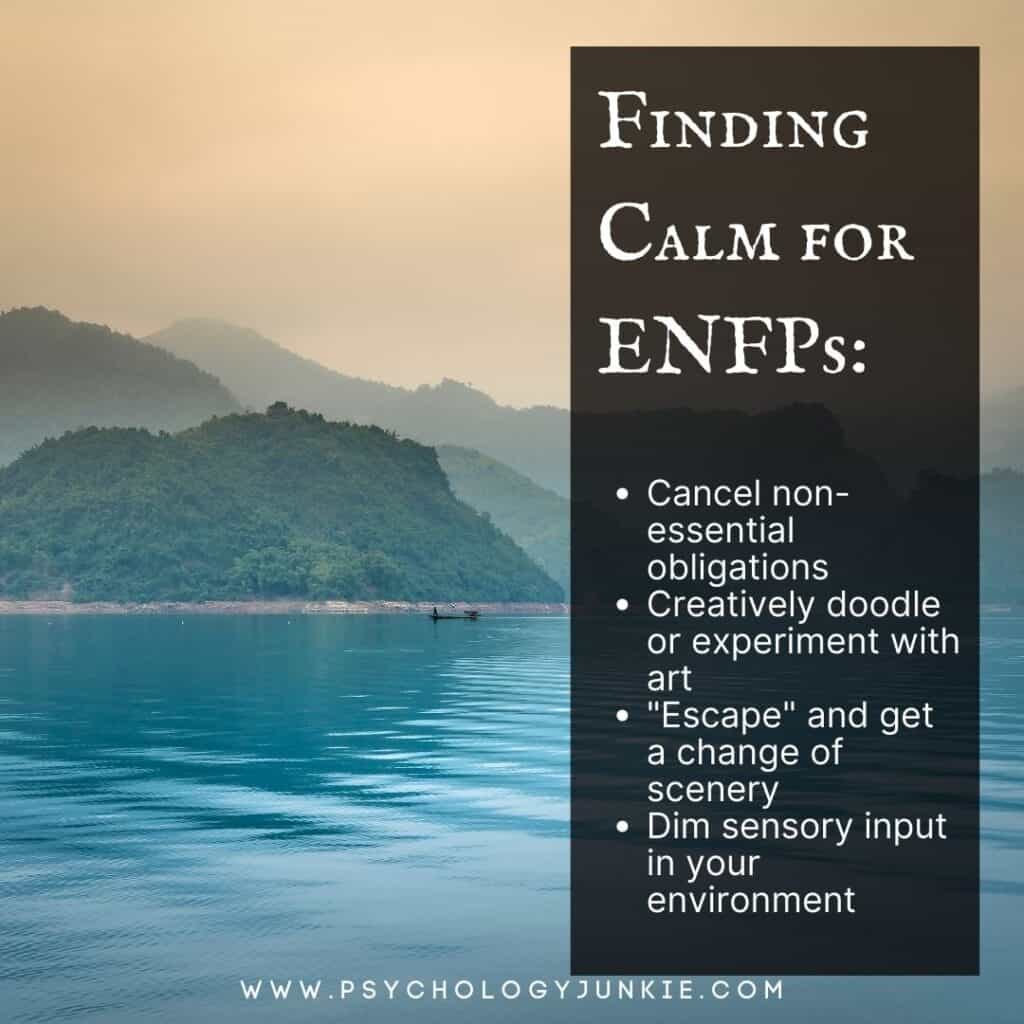
Find out more about ENFPs: Dealing with Emotional Overwhelm as an ENFP
ENTP in Burnout
“I just feel tired, achy, and stuck fixating about pointless, boring details I can’t seem to escape.” – Freddie, an ENTP
ENTPs are usually curious, inventive people who are happiest exploring ideas and finding new angles. They love asking questions, challenging assumptions, and discovering possibilities that others might overlook.
But when burnout hits, that expansive way of thinking can start to shrink. Their mind which can normally jump between ideas, theories, and creative solutions suddenly gets stuck replaying the same concerns over and over. Instead of seeing ten different ways forward, they feel trapped by details, routines, and problems that seem impossible to escape. Small frustrations become strangely consuming. A mistake from the past, a boring obligation, an unfinished task, or even a random physical discomfort can take up far more mental space than usual.
They may feel frustrated with themselves, wondering where their usual curiosity, energy, and ability to improvise went.
An example:
Take Kate, an ENTP homeschool mom known for turning everyday life into an experiment. Science lessons happen in the kitchen, random questions turn into deep dives, and a simple conversation can become an exploration of ten different ideas.
But after months of stress, everything starts feeling different. The creative projects that used to energize her now feel like items on an endless checklist. Instead of imagining new ways to make learning exciting, she finds herself fixating on everything she’s behind on: the messy house, the unfinished tasks, the routines she can’t seem to perfect. She starts wondering if she’s failing at something she used to love.
But Kate hasn’t lost her creativity. She’s just exhausted. Her mind doesn’t need more pressure, more rules, or another system to follow. It needs room to explore again.
Signs That You Need a Break:
For ENTPs feeling trapped in a cycle of negative thoughts about past actions, experiencing a sense of defeat regarding long-term dreams, or drowning in the minutiae that typically sparks their creativity, it’s essential to acknowledge these red flags. A pessimistic outlook, a hyper-awareness of bodily functions, or an increase in anxiety are not the norm for an ENTP and signal the need for reprieve.
What can help:
- Designate time to unplug and get some time alone, giving your mind respite from ongoing demands.
- Take time for activities that get you firmly in the present, such as meditation or nature walks.
- Change your environment, even if temporarily, to stimulate a shift in perspective. Go for a walk somewhere new, take a hike, or simply rearrange the furniture in your room.
- Use deep breathing techniques to anchor your thoughts and emotions.
- Listen to your body’s needs, whether that means napping, hydrating, or getting a healthy meal.
- Jot down your thoughts or emotions in a journal to process your feelings without external pressures.
- Seek out someone who can listen to your concerns without critiquing you.
- Practice self-forgiveness for moments when you don’t feel like you are at your best.

Find out more about ENTPs: 10 Things That Terrify ENTPs
ESFJ in Burnout
“I want everyone to leave me alone. But I don’t. Theyr’e doing it all wrong, but I also don’t want to tell them, but I do. I know that makes no sense.” – Lydia, an ESFJ
ESFJs are extremely aware of the people and systems around them. They’re good at noticing what others need, creating a sense of connection, and making sure important details don’t fall through the cracks.
But when they get burned out, that natural sense of connection can start to feel strained. After giving, organizing, and holding things together for too long, ESFJs tend to feel exhausted and disconnected from the very people they usually care about. Instead of naturally seeing others’ perspectives, they may find themselves focusing on everything that seems incorrect, inconsistent, or unfair.
Small problems that they would normally address with patience suddenly feel impossible to ignore. They may mentally pick apart their own mistakes, analyze other people’s choices, or search for the exact reason everything feels wrong.
Their brain shifts from “How can we work through this together?” to “I have identified 37 flaws in this situation and unfortunately I cannot unsee them.”
An example:
Let’s imagine Roberto, a dedicated ESFJ teacher, known for his empathetic approach in the classroom. Recently, he catches himself feeling unusually disconnected from his students, focusing more on their mistakes than their successes.
He scrutinizes his teaching methods, trying to logically justify why certain lessons didn’t land as expected. Roberto’s natural tendency to support and uplift his students is eclipsed by a cloud of criticism directed both at himself and at others, leaving him questioning if his contributions have ever truly made a difference.
Signs That You Need a Break:
If as an ESFJ, you notice you’re growing increasingly critical of yourself and others, if you’re constantly analyzing behaviors for underlying faults, or if you’re obsessively seeking truth in an attempt to blame, be aware that these could be indicators of burnout. These behaviors are a far cry from the typical empathetic and supportive nature of ESFJs and suggest that a step back is necessary to recenter and recharge.
What can help:
- Schedule deliberate time for self-care and to indulge in hobbies that bring you joy, such as cooking or gardening.
- Reach out to talk things through with someone who understands you and won’t judge you.
- Remind yourself of the times you’ve helped others or made a positive impact on the world.
- Steer clear of individuals or situations that consistently lead to stress, as they can exacerbate feelings of burnout.
- Watch a light-hearted comedy or show to lift your spirits and interrupt the cycle of negativity.
- Change your regular scenery, perhaps by visiting a new place, spending time in nature, or even watching a new movie.

Discover more about ESFJs: 24 Signs That You’re an ESFJ, the Defender Personality Type
ESTJ in Burnout
“I find myself snapping over trivial things, which isn’t like me at all. I just want to be alone and I feel like a lot of feelings are cropping up that I normally wouldn’t pay attention to.” – Mei, an ESTJ
ESTJs are usually practical, capable people who know how to get things done. They’re often the ones making the plans, the structure, solving problems, and keeping tasks from falling through the cracks.
But when burnout strikes, the steady confidence they usually rely on can start to fade. They’re used to asking, “What needs to happen?” and moving forward. They’re often willing to put their own discomfort aside temporarily if there’s a job to do or someone is depending on them. But after pushing through for too long, those ignored feelings start demanding attention. Suddenly, criticism feels sharper and small frustrations hit harder. They may feel unusually sensitive, overlooked, or frustrated that they’re carrying so much while nobody seems to notice.
They might pull away from others because they don’t know what to do with everything they’re feeling. Their usual strategy of “handle the problem and keep going” isn’t working anymore.
An example:
Vincent, an ESTJ project manager, has always been respected for his ability to steer his team towards meeting tight deadlines with focus. Yet, now that he’s burned out, he notices that minor setbacks now seem catastrophic. He misconstrues team feedback as personal criticism and agonizes over perceived inequities within the workflow. At his lowest, isolation feels like the only refuge, accompanied by frustration and self-pity that further sap his once formidable morale.
Signs That You Need a Break:
If you’re an ESTJ who is feeling easily overwhelmed by emotions, sensing a lack of appreciation for your work, or feeling unjustly targeted by critiques, these can be signs that you’re on the brink of burnout. A preoccupation with fairness and an uncharacteristic desire to seclude yourself from others are indications that it’s time to step back and seek restoration.
What can help:
- Make a commitment to incorporate regular exercise into your routine to aid in handling stress.
- Confide in someone empathetic who will listen without being overly reactive or taking your venting to heart.
- Delegate practical tasks or use services to lighten your workload and grant you mental space.
- Allocate time to pause and introspect, allowing yourself to acknowledge and process your feelings.
- Talk about your frustrations with confidant who can constructively break down issues after you have vented.
- Create a list of aspirations or personal interests that you’ve neglected due to a busy schedule, and carve out time to engage in these so you’re not constantly your own personal wants on the backburner.
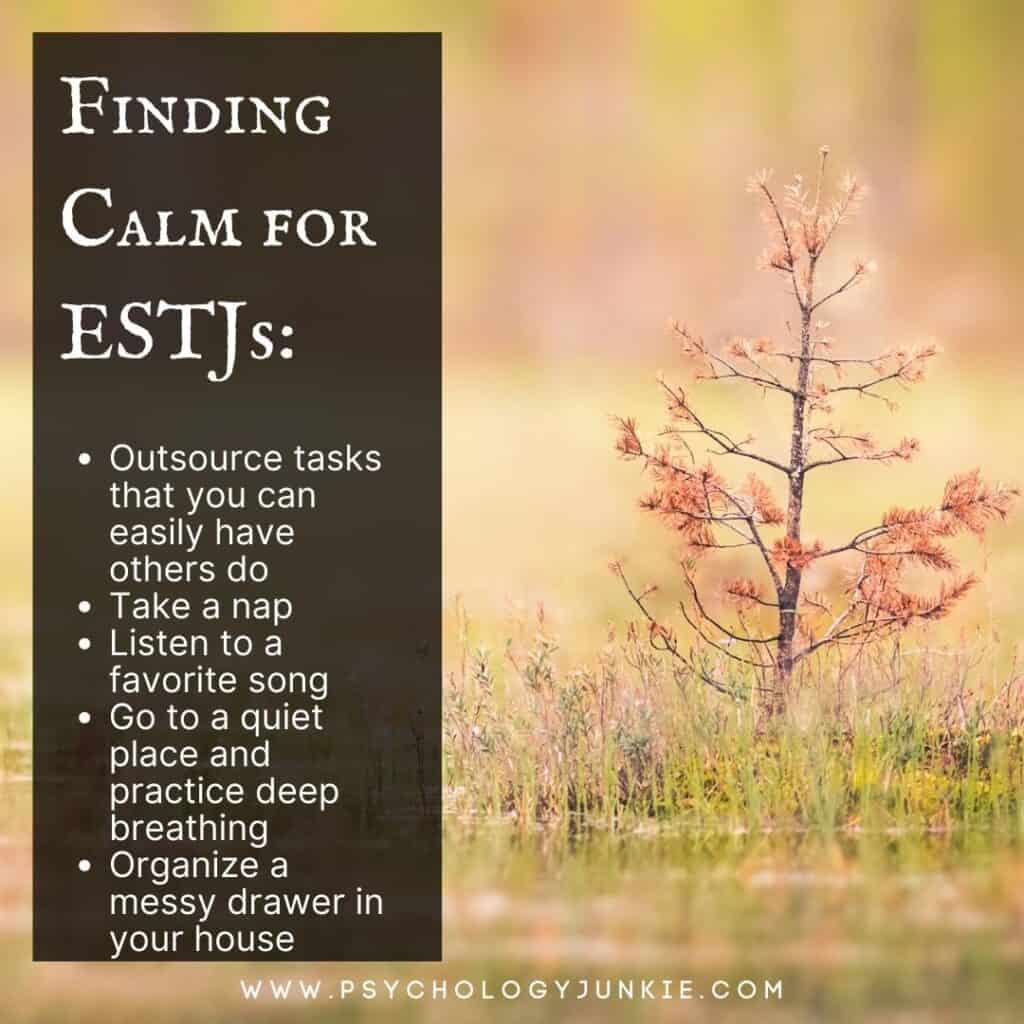
Discover more about ESTJs: 24 Signs That You’re an ESTJ Personality Type
ESFP in Burnout
“Usually I’m an optimist, but now everything seems bleak, and I can’t shake this feeling that tomorrow will be just as bad as today.” – Jayden, an ESFP
ESFPs are energetic, observant people who want to experience life in HD as it’s happening. They’re quick to notice opportunities, respond to what’s needed, and bring a sense of authenticity and action to the world around them.
But when burnout hits, that ability to stay present can start to disappear.
Instead of seeing what they can do right now, ESFPs find themselves trapped in worries about what’s coming next. The future, which normally feels open and full of possibility, starts to feel narrow and threatening.
A small setback isn’t just a bad day. It becomes a “sign” that everything is moving in the wrong direction.
They may withdraw, overanalyze, or get stuck trying to figure out what everything means. Their usual ability to adapt and handle life one moment at a time gets replaced by a heavy sense that something bad is waiting around the corner.
An example:
Lila, an ESFP drama teacher, once the lifeblood of the theater department, finds herself dragging her feet through the hallways, dreading her daily routine that used to thrill her. The spotlight, applause, and the rush of opening night no longer spark joy within her; instead, they feel like burdensome chores. Lila’s rehearsals, once filled with laughter and impromptu dance sessions, have become monotonous and drained of passion. She notices her creativity waning and a growing sense of fear and doom towards the future. Her passions seem trivial in comparison to the big picture, and that is filled with anxiety and negativity.
Signs That You Need a Break:
If you’re an ESFP who’s feeling worn down and troubled by negative predictions about the future, if you notice signs of doom in everyday situations, if you’re over-analyzing ordinary interactions, if suspicion is creeping into your usually trustful view of people, or if you find yourself pulling away from the social scene, these could be signs that you need to address potential burnout.
What can help:
- Seek out a friend or counselor who can listen as you express your worries, someone who understands the importance of just being heard.
- Try journaling to articulate your thoughts and emotions, which can be a cathartic process and help in sorting through complex feelings.
- Give yourself permission to retreat for a while, using that time for introspection and personal space.
- Create some order in your environment, which can help bring a sense of control and calm amidst internal chaos.
- Return to the activities that once brought you joy, whether it’s dancing, painting, or spending a night out with friends, to naturally elevate your mood.
- Engage in mindfulness practices such as meditation or yoga, focusing on your breathing to stay grounded in the present moment.
- Immerse yourself in natural surroundings, letting the tranquility of nature be a balm to your weary soul and help you to rediscover your innate optimism.

ESTP in Burnout
“Sometimes I feel so much compulsion to punch something, to break down something, to release a tidal wave of energy. And I can’t. Then I just feel overwhelmed by pessimistic thoughts about how my entire life is a failure and everything will turn out badly.” – Marco, an ESTP
ESTPs are adaptable, resourceful people who know how to respond to whatever life throws at them. They’re quick to notice what’s happening, troubleshoot problems, and take action when others are still trying to figure out where to start.
But when burnout gets bad, that natural confidence can start to disappear. Instead of trusting themselves to handle the moment, they get stuck worrying about what everything means for the future. A temporary setback starts feeling like evidence of a much bigger problem. A bad week becomes, “What if my entire life is heading in the wrong direction?”
Their usual ability to act and adjust gets replaced by overthinking and frustration. They may feel restless, trapped, or disconnected from the activities and experiences that normally energize them. It’s like their brain goes from “I’ll deal with whatever happens” to “Here is a 10-part documentary explaining why everything is doomed.”
An example:
Clara, an ESTP and professional athlete, was proud of her keen reflexes and dauntless spirit on the track. However, facing burnout, she now feels eerily detached from the sport that was her world.
The sport that once made her feel alive starts to feel pointless. A bad performance doesn’t feel like something to learn from; it feels like proof that she’s failing. A sore muscle isn’t just a sore muscle; it becomes a sign that maybe everything she’s worked for is falling apart. Instead of trusting herself to adapt, she starts searching for certainty about what’s going to happen next.
Signs That You Need a Break:
If you’re an ESTP who feels out of touch with your physical self, engulfed in gloominess, or plagued by negative foresight that seems to stem from trivial occurrences; if you’re wrestling with feelings that life is devoid of meaning, or if panic driven by a sense of impending doom is becoming familiar, it’s likely time to address your burnout.
What can help:
- Prioritize creating personal space and time away from your usual routine to decompress and process your thoughts.
- Find someone who can listen to your concerns without judgment or misinterpretation—a sounding board for your frustrations.
- Regular physical activity can help you regain your connection with your body and alleviate stress.
- Consider receiving a massage or engaging in other relaxation techniques to provide physical relief and mental relaxation.
- Remind yourself of your support network and the people who care about you.
- When stress eases, dedicate time to activities that you find deeply meaningful, even if they are unrelated to your usual day-to-day routine, to combat feelings of emptiness and to enrich your life with purpose beyond immediate pressures.

What Do You Think?
Do these descriptions resonate with what you experience when you’re burned out? Do these tips help? Let us know your thoughts, stories, and experiences in the comments!
Discover even more about your personality type in our eBooks, Discovering You: Unlocking the Power of Personality Type, The INFJ – Understanding the Mystic, The INTJ – Understanding the Strategist, and The INFP – Understanding the Dreamer. You can also connect with me via Facebook, Instagram, or Twitter!
Sources:
MBTI® Manual – A Guide to the Development and Use of the Myers-Briggs Type Indicator® Instrument by Isabel Briggs -Myers, Mary H. McCaulley, Naomi L. Quenk, and Allen L. Hammer (CPP, Inc. 2003)
Psychological Types by C.G. Jung (1971, Princeton University Press)







Susan, thanks for your articles. I read them quite often. But I’m afraid that you missed the INTP burnout this week (yes, I am an INTP myself)
Hi Jose! I did mess up there when I was copying the article over from my word document! It’s in there now, here’s the link to go to that section directly: https://www.psychologyjunkie.com/red-flags-that-youre-burning-out-based-on-your-myers-briggs-personality-type/#intp-in-burnout
Thank you for alerting me to this and my apologies!!
Hi Susan,
I have been a regular reader for years, thank you so much for your blogs. The Infj burn out was right on I just did what Molly described at the beginning of a relationship and I didn’t understand why. I read her comment and yeah that’s exactly how I would describe it and how it feels.